Workshop 1 · AI & bioinformatics

Micro-worlds in the light of nanopore sequencing and artificial intelligence

Carry out a complete sequencing-data analysis without writing a single line of code: from raw DNA reads to a functional hypothesis for an unknown protein.

Payment possible in 3 instalments (3 × €100), until 31 October. How it works

Wednesday 9 December 2026 12h30 – 16h00 Crédit Agricole auditorium · Le Lamentin 15 places
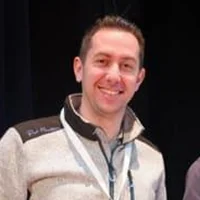
Pr Antony T. Vincent
Pr Antony T. VincentCanada · Quebec

What you will be able to do afterwards

  • Explain the principle of nanopore sequencing and the role of neural networks in producing DNA sequences
  • Run a complete analysis pipeline in Galaxy, without writing code
  • Check the quality of nanopore reads and justify your filtering thresholds
  • Interpret the taxonomic composition of environmental samples and their diversity indices
  • Annotate a bacterial genome and, with AI tools, put forward a functional hypothesis for an unknown protein
  • Assess how much confidence to place in the results of AI tools

Programme

  1. Nanopore sequencing and getting started

    • Microbial biodiversity: what culturing cannot reveal
    • How nanopore sequencing works: a neural network translates the electrical signal into a DNA sequence
    • Getting started with the Galaxy online analysis platform
  2. Analysing a soil microbial community

    • Real dataset: rhizosphere and non-rhizosphere soil, at the surface and at depth
    • Quality control and filtering of nanopore reads
    • Taxonomic classification, community visualisation, alpha and beta diversity indices
  3. From genome to function: what AI brings

    • Annotating a complete bacterial genome sequenced on a MinION
    • Identifying proteins of unknown function, virulence genes and antibiotic-resistance genes
    • Structure and localisation prediction with protein language models
  4. Critical review and wrap-up

    • Questioning a chatbot about your own results, and checking its answers
    • Designing a statistically sound experimental plan
    • Discussion of participants' research projects

Your trainer

Pr Antony T. Vincent

Canada · Quebec

Professor at Université Laval (Quebec, Canada) and researcher at the Institute of Integrative and Systems Biology (IBIS).

Workshop 1: AI and bioinformatics

24 s · In French, with French subtitlesWith Prof. Antony T. Vincent, Wednesday 9 December.

Is it for you?

Who it is for

  • Researchers, academics and technicians in ecology, biology or environmental sciences
  • Students in these fields
  • Anyone who wants to discover sequencing-data analysis applied to microbial biodiversity

Prerequisites

  • No prior knowledge of bioinformatics or programming
  • Basic notions of biology (DNA, gene, bacterium)
  • A laptop, and a free account created on the Galaxy platform before the session (link sent on registration)

Method

  • Short theory segments, illustrated with demonstrations
  • Step-by-step guided practicals, each participant on their own computer
  • Case study on real data and collective critical discussion

How to pay for your place

In one payment

€300 per workshop, paid online by card on the association's ticketing page. Your ticket is sent to you by email.

Book online (opens in a new window, HelloAsso website)

In 3 instalments: 3 × €100

Three card payments: €100 on ordering, then on 1 November and 1 December. Your ticket is sent to you once the 3rd payment is received. Available until 31 October.

Pay in 3 instalments (opens in a new window, HelloAsso website)

My employer or OPCO pays

The workshops are delivered by ESEP-M, a Qualiopi-certified training organisation: your employer or your OPCO (French training fund) can cover the cost. Ask for a quote and a training agreement.

Request a quote

secretariatesep@gmail.com

Practical information

  • Wednesday 9 December 2026
    12h30 – 16h00
  • Auditorium at the Crédit Agricole headquarters
    21 rue Case-Nègre, Place d'Armes, 97232 Le Lamentin, Martinique
  • 15 places
    Registration required
  • 300 €
    Training certificate issued by ESEP-M
Is any particular level required?
No prior knowledge of bioinformatics or programming · Basic notions of biology (DNA, gene, bacterium) · A laptop, and a free account created on the Galaxy platform before the session (link sent on registration).
How many places?
15 places, to leave real time for discussion with the trainer. Registration is required.
Can I pay in instalments?
Yes, until 31 October: 3 instalments of €100, on ordering, then on 1 November and 1 December. Your ticket is sent to you once the 3rd instalment is received. See how.
Can my employer pay for the workshop?
Yes: the workshops are delivered by ESEP-M, a Qualiopi-certified training organisation. Write to them for a quote and a training agreement: secretariatesep@gmail.com.
Is the symposium included?
Lectures and scientific sessions are free, with registration: book your symposium day ticket too — it is on the same ticketing page.
Can I attend several workshops?
Yes: the three workshops take place on three different days, from Wednesday 9 to Friday 11 December.

The other two workshops

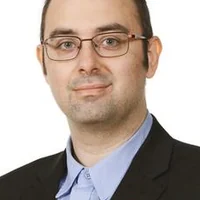
Dr Valentin Vasselon

Workshop 2 · Environmental DNA

Thursday 10 December 2026 · 12h30 – 16h00

Environmental DNA for biodiversity assessment and conservation

Dr Valentin Vasselon · France · Thonon-les-Bains

  • Principles and applications of environmental DNA (eDNA)
  • Metabarcoding and biomonitoring of aquatic environments (Water Framework Directive)
  • Introduction to the bioinformatic analysis of sequencing data

300 € or 3 × €100 15 places Laptop required

View the programme

15 places, half a day to put it into practice

Wednesday 9 December 2026 · 12h30 – 16h00 · Crédit Agricole auditorium · Le Lamentin

300 € or 3 × €100 Book (opens in a new window, HelloAsso website)